The Nook / El Rinconcito
In Solidarity with Indigenous Peoples
VLAFF’s Nook / El Rinconcito is a hybrid space that invites audiences to engage with Indigenous artists, creative work, and critical issues beyond Land Acknowledgements through a variety of mediums—including film, music, poetry, food recommendations, calls to action, and more.
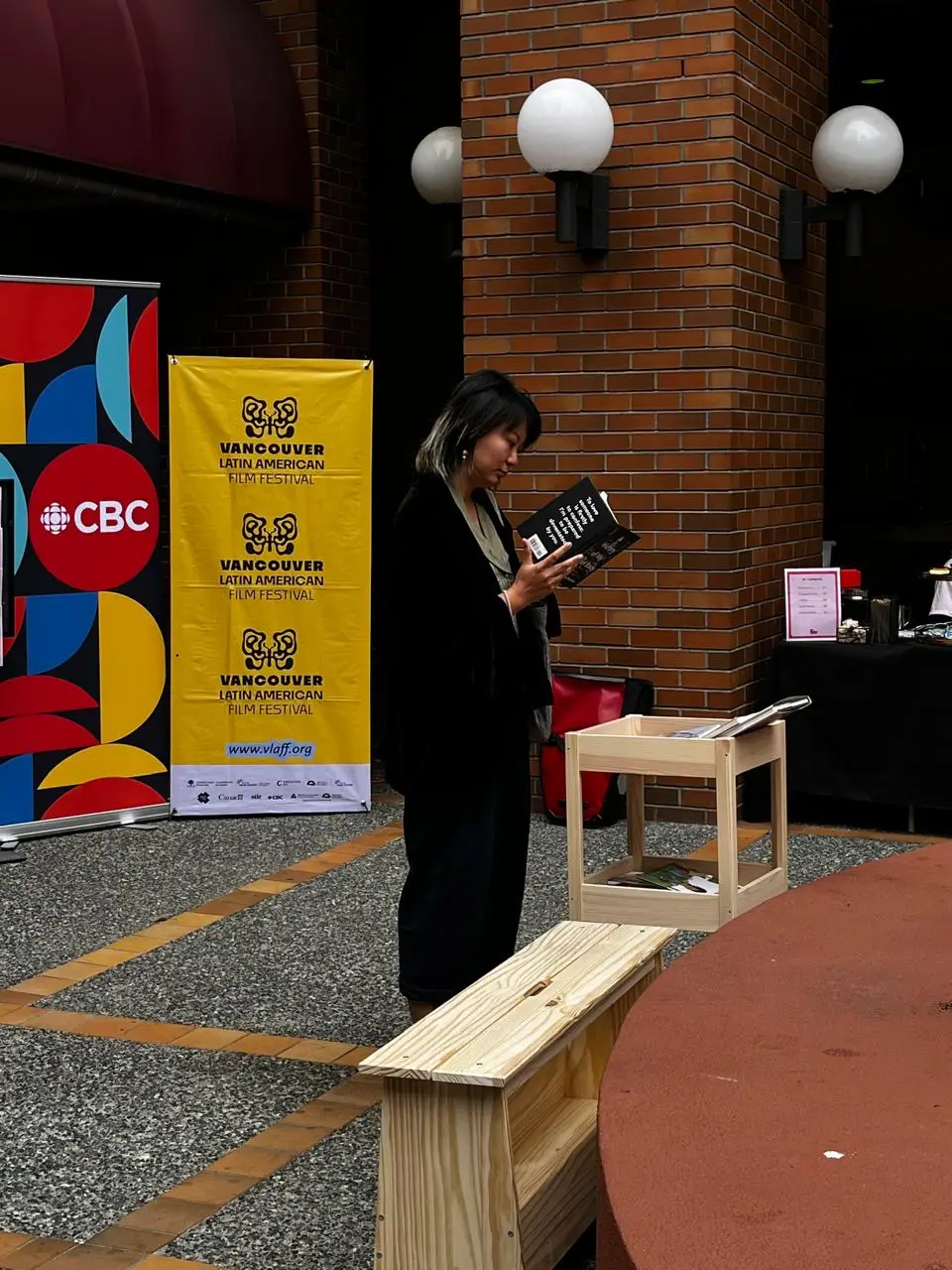
The project was created by Valentina Acevedo Montilla (Managing Director), Mirella Reichenbach Livoti (Development Coordinator) and Dani Rodriguez Chevalier (Festival Coordinator), and it grows directly from VLAFF’s earlier work with Taajuu Consulting—an anti-oppression, Indigenous, and 2SLGBTQIA+ owned and operated group based on Treaty 1 territory.
Having worked together since 2024, VLAFF and Taajuu’s collaboration has mostly involved diving deeper in the practice of Living Land Acknowledgements, a more relational approach to formal statements that recognizes one’s ongoing and evolving commitment to the land and Indigenous people as well as the direct and collateral harm that has been done to such communities.
We have continued that work with the 2nd Emerging Latine Programmers Cohort, whose thoughtful and collective reflections are the foundation of VLAFF’s current Living Land Acknowledgement, and we have also expanded this work into the creation of the Nook.
To celebrate the premiere of the physical Nook during VLAFF’s 24th edition, we rolled in a charming wooden cart and seating bench, creating a welcoming, traveling bookshelf packed with curated poetry, fiction, academic, and creative titles. In honor of this exciting launch, our public programming series featured an unforgettable Indigenous Storytelling Night.
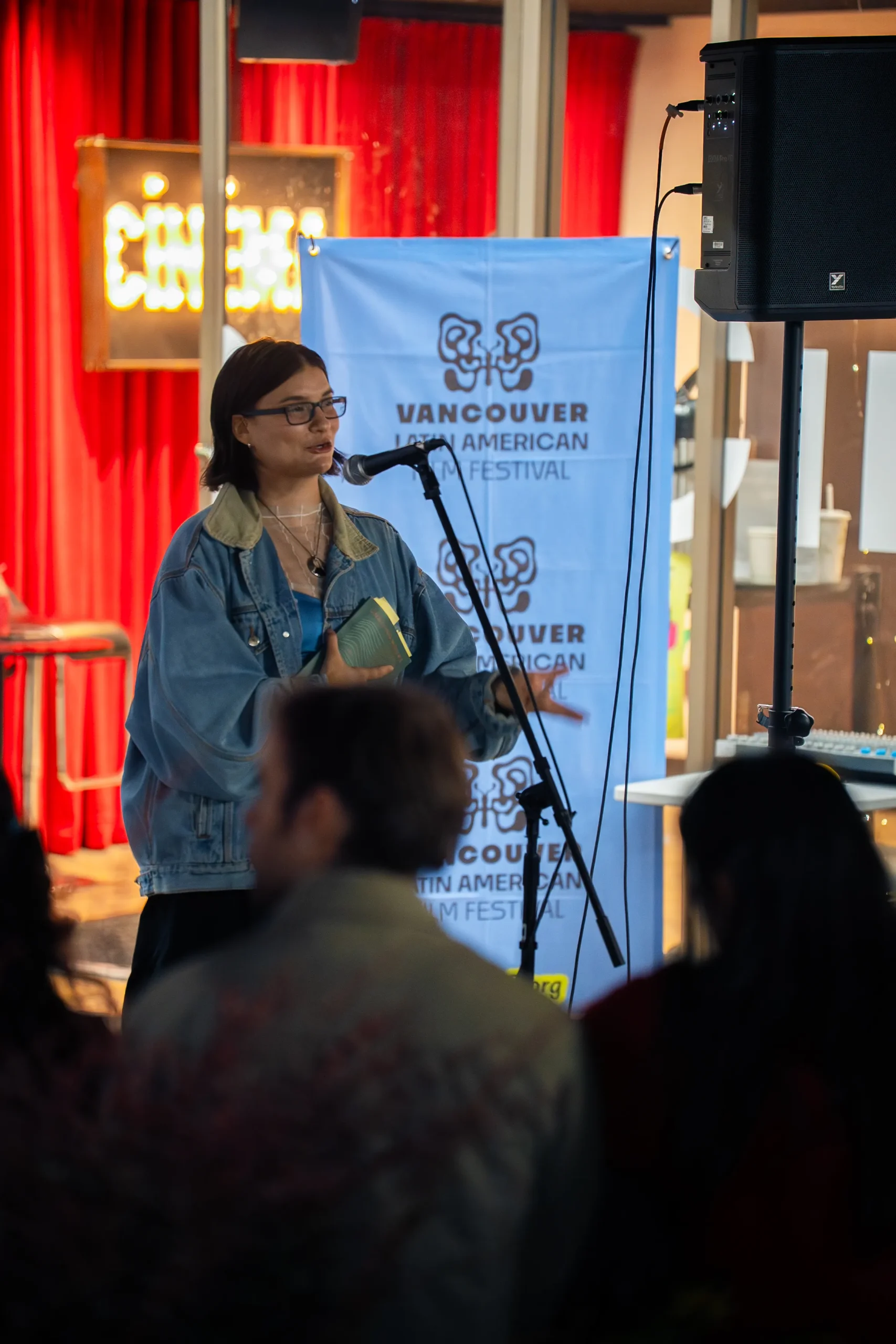
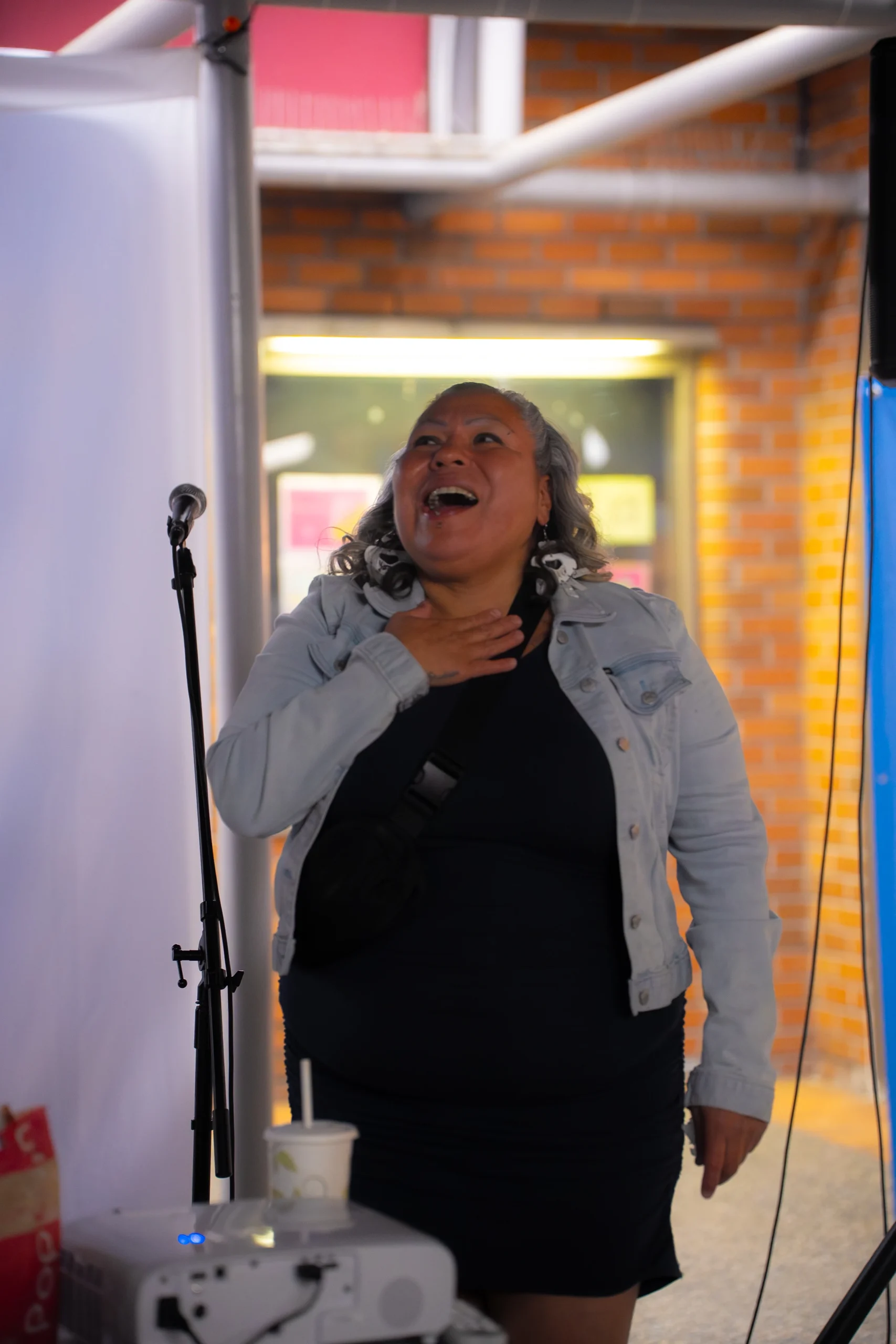
The event brought our community together for a special screening of the short film Our Grandmother the Inlet by filmmakers Kayah George and Jaime Leigh Gianopoulos, alongside a heartfelt live poetry performance by writer and educator Selina Boan.
Below find our current Living Land Acknowledgement, some more context as to our work with Taajuu Consulting, the history of the section “Films from Turtle Island & Beyond,” and the directory for the materials available at the Nook.
lIVING LAND ACKNOWLEDGEMENT
With respect and gratitude, the Vancouver Latin American Film Festival acknowledges that it takes place on the ancestral and unceded territory of the Coast Salish Peoples, including the territories of the hən̓q̓əmin̓əm̓-speaking xʷməθkwəy̓əm (Musqueam) and Səl̓ílwətaʔ/Selilwitulh (Tsleil-Waututh) Nations, and the Sḵwx̱wú7mesh Sníchim-speakig Skwxwú7mesh (Squamish) Nation. We believe that having access to the language(s) of our communities and ancestors allows us to be connected to culture, and at VLAFF we are proud to showcase multiple languages from across Turtle Island & Abya Yala in our film programs.
In June 2026, the Emerging Latine Film Programmers delivered a woven living land acknowledgement, which we’d like to highlight here:
Migration is part of the living world. Salmon return to their rivers, geese cross continents, butterflies travel vast distances. Yet imperialism and colonialism create a paradox: they move across territories, extract, and transform ecosystems, and colonialism settles, all while simultaneously restricting human movement through borders, checkpoints, and walls. Our understanding of migration cannot be separated from histories of conquest, displacement, exploitation, and extraction.
Our access to safety, healthcare, arts, and cultural spaces is tied to these histories. What does it mean to inherit such privileges while others continue to endure dispossession and violence?
We gather on the ancestral and unceded lands of the Coast Salish peoples. As migrants and settlers, we reflect on what it means to gather here. These lands carry wounds and memory. In the late 1800s, on the land we stand on, Musqueam, Squamish, and Tsleil-Waututh communities were forcibly removed from villages they had called home for thousands of years. Their houses were burned. Their burial grounds were dug up. The Ancestral names of these places were replaced with colonial names, while Indigenous testimonies about the land were dismissed in their courts. Even two years ago, the City of Vancouver formally acknowledged that its Heritage Register continued to reproduce this erasure. This is not distant history. It is ongoing.
The same logics of dispossession continue across the world—in Palestine, Sudan, Myanmar, the Democratic Republic of the Congo, and elsewhere. While each struggle is distinct, they are connected through systems that treat land, people, and life itself as resources to be controlled.
Many of us who come from Latin America, where similar colonial patterns unfolded across centuries: lands seized, languages suppressed, names replaced, histories rewritten. Today, imperialist powers like the US are recreating these patterns in our region. The stories and films we share carry traces of these histories and current moments. They are part of a larger fabric of resistance, survival, and remembrance that extends across territories. Decolonization is not symbolic and it is not one-size-fits-all. It requires ongoing relationships, learning, and action.
STAGES OF COLLABORATION WITH TAAJUU CONSULTING
VLAFF began collaborating with Taajuu Consulting in 2024 during the first Emerging Film Programmers Mentorship Program. The ongoing partnership between Taajuu and VLAFF has been central to how the festival and its staff engage with Indigenous knowledge, storytelling, and sovereignty. The learning we experience together allowed us to create meaningful, accountable connections between Indigenous and Latine communities as well as public programming opportunities for VLAFF audiences centering Indigenous voices and creators.
The main topic of exploration during these earlier stages of collaboration were pathways for solidarity among Latine migrant communities and Indigenous communities from these lands. Through continuous dialogue and feedback, the first film programmers mentorship cohort crafted land acknowledgments that established bridges between current social justice struggles, Indigenous issues, and the content of our film program, which were presented before screenings at our 22nd edition.
The third and main stage of the Nook/ El Rinconcito has been a collective effort among VLAFF staff members on creating a compendium, the Digital Nook, of the different strategies and initiatives that the festival has led to bring more attention to Indigenous creators and issues across the years, and to provide a directory of the materials we have chosen to share with VLAFF goers and communities. We are interested in building on the practice of Living Land Acknowledgements by creating more ongoing, accessible, and tangible opportunities for engagement: places where someone might encounter a book, discover an artist, watch a short film, listen to a musician, learn about a local initiative, explore the work of Indigenous filmmakers who have been part of our programs, or follow their curiosity somewhere new.
Our collaboration with Taajuu restarted in 2026 through two parallel mentorships: the second Emerging Film Programmers cohort, and the position of Development Coordinator, filled by Mirella Livoti. While the idea of Nook/ El Rinconcito was slowly taking shape, the new film programmers mentorship cohort worked alongside Taajuu on building land acknowledgements that related to who they are as individuals. These land acknowledgements were presented in June at 2026 Emerging Latine Creators Showcase.
We are grateful to Yahlnaaw and Azka from Taajuu Consulting for their guidance and partnership. We also extend our gratitude to Lucas, who participated in our collaboration in 2024.
Check out Taajuu’s website here.
Standard
$13 | This is our standard ticket price and helps us cover the core costs of running the festival.
Discounted
$10 | For students, seniors (65+), or anyone who needs a reduced price, no questions asked.
Extra
$15 | If you’re able to pay a little more, thank you! This helps us keep tickets accessible for others.
HISTORY OF FILMS FROM TURTLE ISLAND & BEYOND
Welcome to Films from Turtle Island and Beyond
We are Akira and MasaꞋn, the curators for “Films from Turtle Island and Beyond,” the category at VLAFF that focuses on cinema created by filmmakers from Nations that are so-called Indigenous across the so-called North and South American continents.
I am Akira Iahtail, and I am from amiskwaciwâskahikan, also known as Edmonton, AB, in Treaty 6 territory. Maternally, I am Métis and nehiyaw from Bigstone Cree Nation in Treaty 8 territory. Paternally, I am Omushkego from Attawapiskat First Nation in Treaty 9 territory, which I am a registered member of. Now, I reside on the unceded lands of the xʷməθkʷəy̓əm (Musqueam), Sḵwx̱wú7mesh (Squamish) and səlil̓wətaʔɬ (Tsleil-Waututh) peoples.
I am MasaꞋn Galindo and live in Durango. Maternally, I am from KokmaꞋsuꞋsdaiꞋ and paternally from Gavilanes, both are anexos that are part of the comunidad agraria Juktɨr, Santa María de Ocotán, one of the seven OꞋdam and AuꞋdam communities that conforms our territory in México.
In 2022 we started working together as programmers and curators of the category “Indigenous Filmmakers from Latin America and Canada.” The moment that we began, we talked about the way that the Indigenous category generalizes and homogenizes the experiences, histories and ways of life of all the different Nations that are encapsulated within that category. For us, it was important to focus on the territory that we all share, rather than centering a political category (Indigenous) that was created by the states that continue the colonization in our lands and Nations. We understand that each Nation dwells in their own way throughout these continents and we want to embrace and celebrate that diversity.
In our discussions, we realized how it was necessary to recognize where this festival takes place. The name that many, not all, but many Indigenous Nations across so-called Canada and the United States call this land Turtle Island. Rather than simply calling it “Films from Turtle Island,” which does not acknowledge the diversity of films we receive from throughout Latin America, we recognize that many films we feature are not only from Turtle Island, but beyond to our Indigenous kin across so-called South America.
Since we began curating this program in 2022, we have received more and more submissions to our program. The submissions reflected a huge diversity of filmmakers who share different stories, formats, genres, etc. and because of that, we wanted the program to include not only shorts but features because it showcases the diversity and range of Indigenous filmmakers throughout the continents.
Each year the conversations, topics, and stories within our program focus on conversations that are necessary to address, like intergenerational trauma, futurism, exploitation of land and ceremony, ancestral traditions, and more. As programmers, we try to embrace it and make it part of the dialogues with the filmmakers but also within the movies through the programs we curate. After many years of being witness to the work of hundreds and hundreds of filmmakers, we have embraced the privilege to see how filmmakers tell their stories, take risks, be critical with themselves and communities, explore various formats and narratives without fear. Because of that, we invite everyone to see and explore these cinemas that break categories, borders and invite you to question yourself too.
kinanâskomitin, taxchab, gracias, thank you,
Akira and MasaꞋn
Indigenous Film From BC & Beyond – A Beginning
In 2011, the City of Vancouver recognized its 125th anniversary since its incorporation as a city. As part of the celebrations, there was increased awareness that the land and waters that the City of Vancouver came to exist on needed to be recognized first as the traditional, ancestral, and unceded territory of the Coast Salish Peoples, including the territories of the xʷməθkwəy̓əm (Musqueam), Skwxwú7mesh (Squamish), and Səl̓ílwətaʔ/Selilwitulh (Tsleil-Waututh) Nations.
With grants from the City of Vancouver and BC Arts Council, Festival Director Christian Sida Valenzuela, Festival Manager Lisa Pearlman, and Programmer Anne-Mary Mullen organized ¡Fiesta 125! A Celebration of Latin American Culture in Vancouver featuring works by local Latin-Canadian filmmakers alongside Indigenous Film From BC & Beyond, a program of Indigenous films from across Canada and Latin America.
This marked the first time VLAFF brought together Indigenous filmmakers from across the continents to showcase their work side by side.
Standard
$18 | This is our standard ticket price and helps us cover the core costs of running the festival.
Discounted
$15 | For students, seniors (65+), or anyone who needs a reduced price, no questions asked.
Combo Ticket: Opening Night Film + Party at The Pearl
$25 | Make a night of it! This combo ticket gets you into both our Opening Night Film and the legendary after-party at The Pearl with live music, dancing, and all the festival feels.
THE NOOK’S DIRECTORY
The materials selected for the Nook/ El Rinconcito are grounded in our affective connections and familiarity with the work of Indigenous creators, which we have encountered along our unique journeys as Latin American immigrants to Canada. We decided to organize these materials according to some of the most emblematic sections of VLAFF’s program as a way to guide our process, but by no means do these groupings represent limiting categories.
Throughout the development of this project, which took over 9 months, we gathered and consulted with many VLAFF team members. The input and care of the Emerging Latine Programmers Cohort, as well as the recommendations by Akira Iahtail and Masa’n Galindo, co-curators of the shorts program Films from Turtle Island & Beyond, have been vital contributions to this work.
This is a new intitiative which we intend to keep nurturing, and we welcome community feedback. For any feedback or suggestions, contact us at info@vlaff.org
Click on the names of artists, creators and materials and explore their websites!
New Directors / First Strides
Vanguardias
Cinema & Literature
A possible space for artists making early or formative strides in their creative practices, mirroring VLAFF’s interest in emerging voices.
Experimental, interdisciplinary and future-facing practices across visual art, film, performance, literature, and other media.
Books, poetry and writing that audiences can spend time with inside the Nook and that create connections with VLAFF’s Cinema & Literature programming.
¡Activismo!
Films from Turtle Island & Beyond
Queer Pix
Resources connected to land, environmental justice, Indigenous sovereignty, organizing, and calls to action.
One of VLAFF’s oldest programs, which began 15 years ago, featuring Indigenous films from Turtle Island, colonially-known Canada, and Abya Yala, colonially-known Latin America. This program is co-curated by Akira Iahtail and Masa’n Galindo who were involved in the selection of materials and works for the Nook/ El Rinconcito, plus other Indigenous filmmakers.
Writing that creates connections with Queer Pix and Indigenous queer and Two-Spirit storytelling.
¡Así Suena! Turtle Island
¡Así Suena! Abya Yala
¡Así Sabe!
Food, cookbooks, recipes, and food writing that can connect learning with everyday practices and Indigenous food knowledge.
Standard
$15 | This is our standard ticket price and helps us cover the core costs of running the festival.
Discounted
$13 | For students, seniors (65+), or anyone who needs a reduced price, no questions asked.
Extra
$18 | If you’re able to pay a little more, thank you! This helps us keep tickets accessible for others.
Super
$21 | A way to show extra support for the festival and its artists. Your generosity helps us grow and sustain this work.
First Movie Combo: Ticket + Membership
$17 | For first-time attendees: includes your festival ticket + required $3 membership.
Available at The Cinematheque and online.
First Movie Combo: Ticket + Membership
$17 | For first-time attendees: includes your festival ticket + required $3 membership.
Available at The Cinematheque and online.
Project Contributors
Project Leads
Managing Director – Valentina Acevedo Montilla
Festival Coordinator – Dani Rodríguez Chevalier
Development Coordinator – Mirella Reichenbach Livoti
Project Collaborators
Taajuu Consulting – Yahlnaaw and Azka
Co-curators Films from Turtle Island & Beyond – Akira Iahtail and Masa’n Galindo
2026 Emerging Latine Programmers Cohort – Pablo Betancourt, Rodrigo Ferrat, María Alejandra Blanco Gutiérrez, Nicolás Serrano de la Paz, and RCHRDY Ricardo Hardy.
Films from Turtle Island and Beyond Directory
Festival Consultant – Anne-Mary Mullen
Programming Director – Christian Sida Valenzuela