Following the Voices of Our Ancestors to the Future
Our stories do not end when the apocalypsis and destruction arrives. That is just one part of our history, there is a future when the Earth is alive and healthy again, when we can live on it, when we come back following the voice of our ancestors. This does not happen magically, it happens because of the effort and work of generations, when all the stories matter.
Indigenous futurisms is possible because it is made up of stories of peoples who are finding love, having to leave their family, coming back to their Indigenous language, fighting against ceremonial extractivism, and connecting historical resistance to the present through archival material.
Curated by Akira Iahtail & Masa’n Galindo
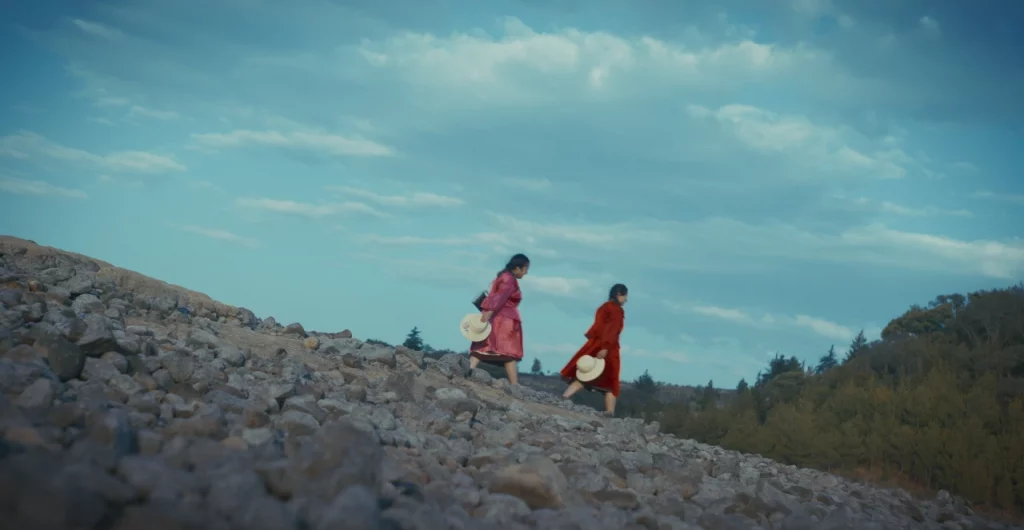
Dueto Charanda
Dir. Fred Cayetano | Mexico | 16 min | Spanish
Himelda has a choosen fate: a marriage proposal. The morning after, local radio
announces the singing contest in duets, in a random way meets Amparo at the
bus stop who convinces Himelda to be a duet and go to the audition for the
contest, she accepts and they practice every day at the church for weeks. An
unexpected connection happens. After several days Himelda would have to
question herself: does she likes Amparo?

Fred Cayetano (2001) is a Mazahua filmmaker and writer born into a migrant Mazahua family on the outskirts of Mexico City. He is currently completing a degree in Hispanic Language and Literature UNAM.
His work has been supported by the Mexican and Central American Indigenous and Afro-descendant Audiovisual Creation Fund (ECAMC), the Morelia International Film Festival’s First Indigenous Filmmakers Lab, and Bolivia Lab. He is a co-founder of Tsi dyoo films, a Mazahua production company dedicated to Indigenous storytelling.
Alongside developing his first feature film, Fred works as a producer, poet, and performer, exploring the intersection of cinema, literature, and Indigenous languages. In 2025, he received the UNAM Young Poetry Award.

Techiq
Dir. Missael Sánchez Arce | Mexico | 30 min | Spanish, Náhuatl
A peasant couple wait for the bird known as Techiq to announce their son’s return, while facing illness and the appearance of a strange creature of the forest.

Born in the Nahua community of San Miguel Canoa, Mexico, he graduated in Cinematography from the Benemérita Universidad Autónoma de Puebla. His short films have been screened at various international festivals. His work has focused on safeguarding the indigenous Nahuatl language.

Sukkaillutit Uqaruk
Dir. Ashley Qilavaq-Savard | Canada | 5 min | English, Inuktitut
A moving parallel between language loss and climate change, highlighting personal and communal resilience.
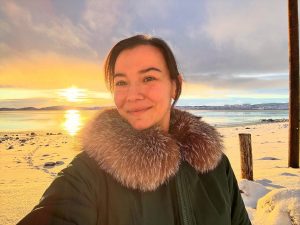
Ashley Qilavaq-Savard is an Inuk filmmaker from Iqaluit, Nunavut. Her first short horror film Reclaim has screened at 19 festivals, winning 4 awards and 3 nominations. Her first short documentary Lessons from Our Grandfather has screened in several countries, winning one award. Her latest short documentary Sukkaillutit Uqaruk-Say It Slowly had its world premiered at the Tampere film festival and International premiere at the Maoriland Film festival.
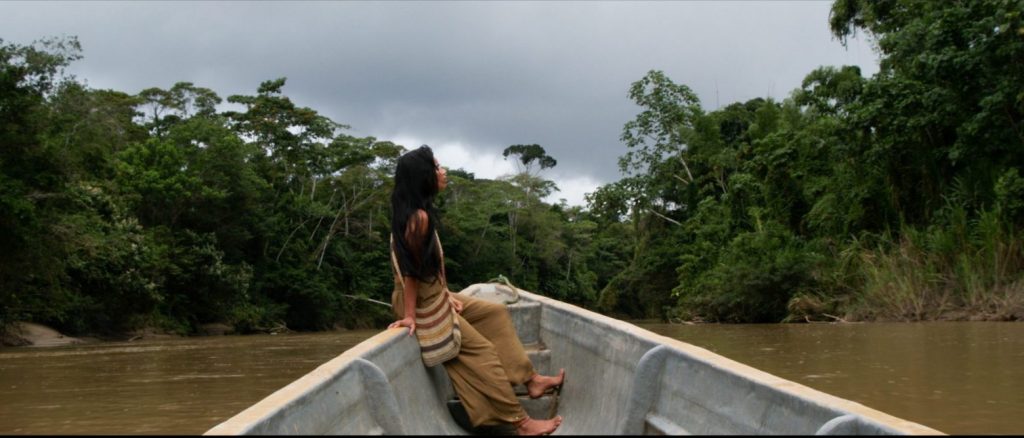
Waska: The Forest is My Family
Dir. Nina Gualinga | Ecuador | 15 min | English, Spanish, Kichwa
In memory of her grandfather, Nina Gualinga speaks to his legacy by calling out the commodification and extractivism of Indigenous lands in the Amazon Rainforest, and how this consumption has now extended to the ancestral medicine, hayakwaska.

Nina Gualinga, from the Sarayaku People in the Ecuadorian Amazon, is a leading advocate for Indigenous rights and climate justice. Sarayaku is known for its landmark victory against the Ecuadorian government and oil companies, setting a legal precedent for Indigenous rights throughout Latin America.

Earth
Dir. Itandehui Jansen | Mexico | 15 min | English
A young man, born and raised in the vastness of the galaxy, lands on an unknown planet.
As he surveys the landscape, he recognises fragments from ancient stories.
Driven by a quiet urgency, he contacts his ship’s command to retrieve archival recordings of the last humans to abandon earth. Slowly, it dawns on him that he has returned to his ancestral home.

Itandehui Jansen was born in Oaxaca, Mexico and studied film directing at the Netherlands Film Academy in Amsterdam. She participated in different international training programs, such as the Binger Film Lab, the Berlinale Talents, and the Torino Film Lab. Her films have screened at international festivals such as the IDFA (International Documentary Film Festival Amsterdam), The Morelia International Film Festival, Washington D.C. Shorts, ZINEBI, and SLAMDANCE. She was nominated for the Mexican Film Critics Award Diosa de Plata 2013. Her feature drama film In Times of Rain won the Award for Best Emerging Feature Film at the Oaxaca Film Fest. Itu Ninu was awarded the Festival Grand Prize at the Arizona International Film Festival. At present she teaches Screenwriting and Directing at Screen Academy Scotland.