When visiting Havana’s cinemas, such as the Yara, the 23 y 12, and of course, the Chaplin—the best-equipped cinema of them all, which also serves as Cuba’s national cinematheque —one can admire and purchase film posters, made using the Cuban silkscreen printing method, which have earned a special place worldwide in graphic design.
Even better, in the hall of the Cuban Institute of Cinematographic Art and Industry (ICAIC), adjacent to the Chaplin Cinema, one can enter and see the immense room covered on three walls and the entire ceiling with some of the most emblematic posters, such as those for the multi-award-winning and Oscar-nominated film, Fresa y Chocolate (Dirs. Juan Carlos Tabío, Tomás Gutiérrez Alea), or Lucia (Dir. Humberto Solás), one of the masterpieces of Cuban cinema.
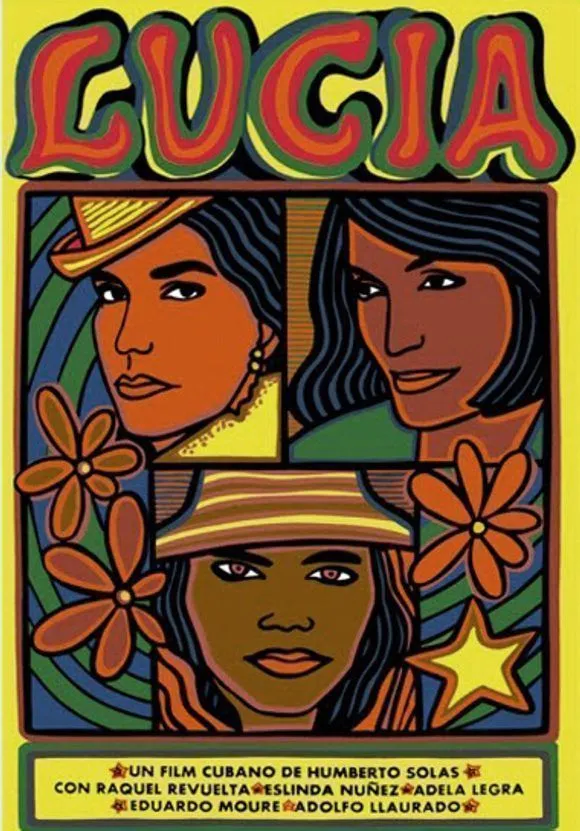


It was Alfredo Guevara—the legendary cultural promoter and founder of the Cuban Film Institute—who championed the promotional graphics of Cuban cinema, initially created by artists such as Alfredo Rostgaard, Eduardo Muñoz Bachs, and Rafael Morante in the 1950s. The posters contributed excellent designs using an entirely artisanal technique: screen printing, with which they achieved a great richness in textures.
In Cuba, film posters experienced a boom in the 1960s—the golden age of Cuban cinema—and revolutionized the visual arts.
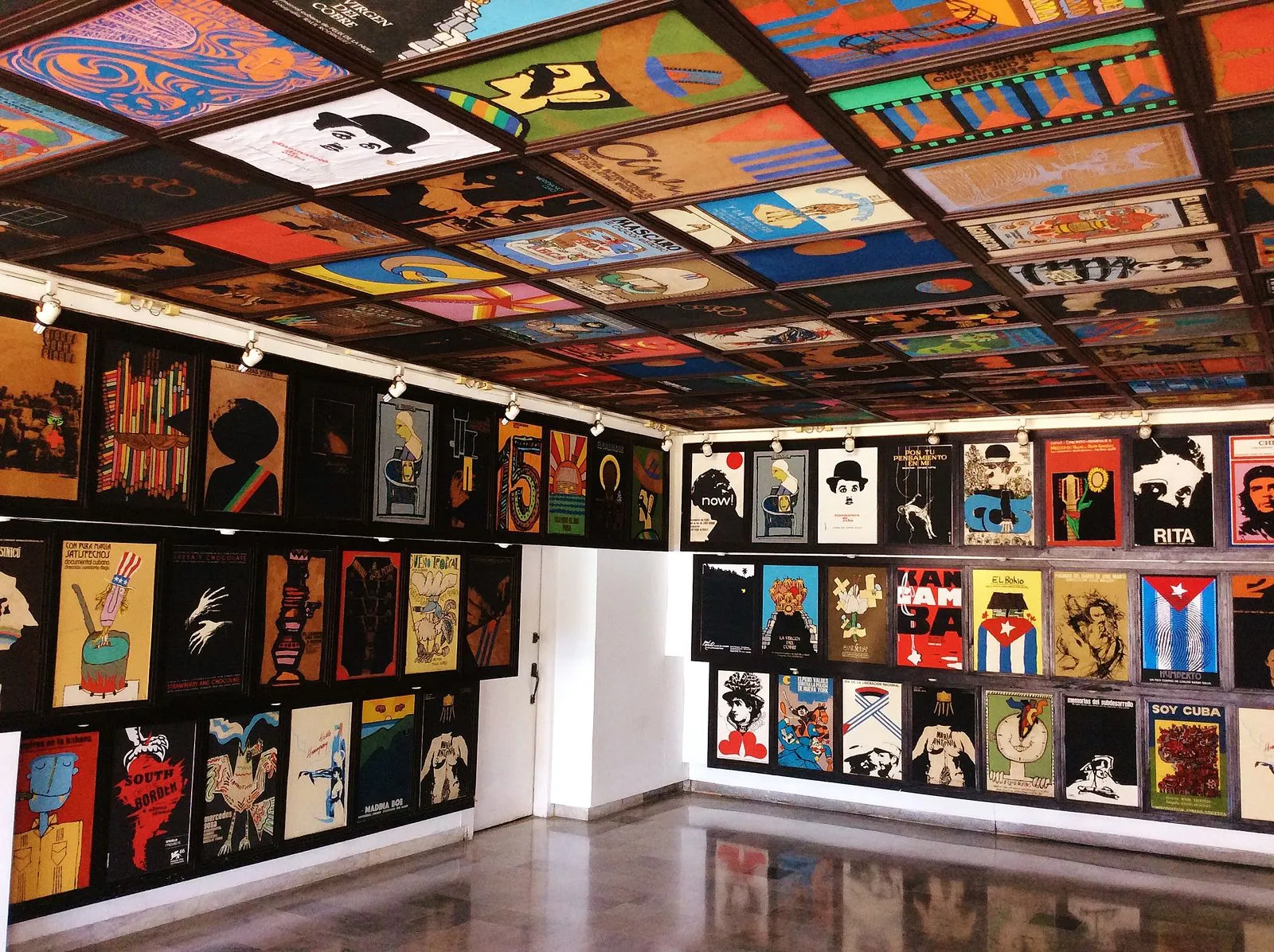
In 2023, UNESCO inscribed the Cuban Cinema Poster Collection, housed at the Cuban Film Institute, into the Memory of the World Register. This includes 2,230 pieces intended for the promotion of both Cuban and foreign films and film-related activities as well as 150 sketches from designers to indicate to the technicians the image to be reproduced.
This photo shows the interior of the ICAIC.
The Cuban Cinema Poster is a visual and cinematic record of a country that has contributed significantly to Latin American cinema. It draws inspiration from American pop art and op art, and was featured at VLAFF in 2017. To celebrate the festival’s 15th edition, a Quinceañera designed in this style by Havana artist Fabian Muñoz was used as the festival’s image.